Why a Lipid Profile Test Is Important for Your Heart Health

World No Tobacco Day 2026: Say No to Tobacco, Choose a Healthier Life
May 27, 2026
The Hidden Clues to Better Health: Why Laboratory Investigations Matter
June 4, 2026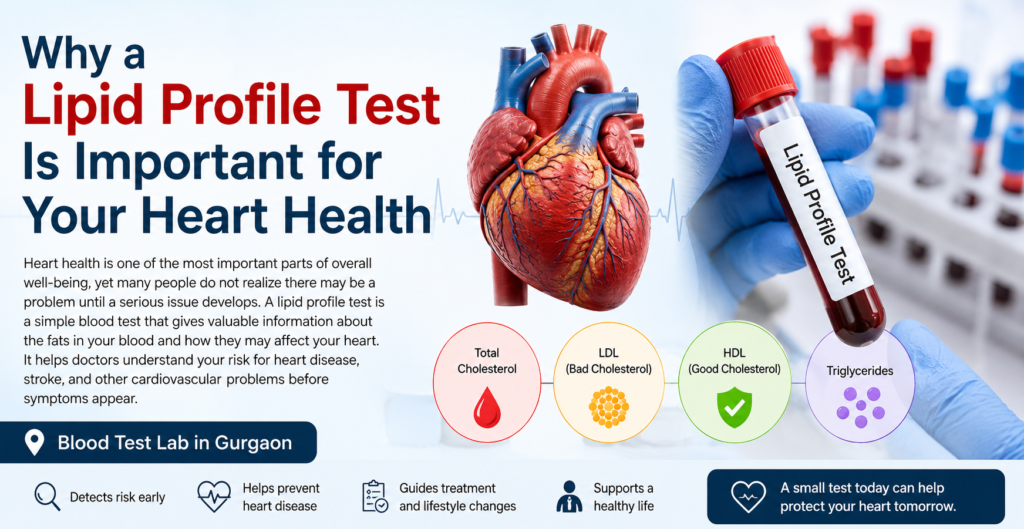
Heart health is one of the most important parts of overall well-being, yet many people do not realize there may be a problem until a serious issue develops. A lipid profile test is a simple blood test that gives valuable information about the fats in your blood and how they may affect your heart. It helps doctors understand your risk for heart disease, stroke, and other cardiovascular problems before symptoms appear. If you are looking for a reliable blood test lab in gurgaon, getting a lipid profile test as part of your regular health checkup can help detect potential heart-related risks early and support timely preventive care.
This test is often recommended during regular health checkups, especially for people who have diabetes, high blood pressure, obesity, a family history of heart disease, or an unhealthy lifestyle. Even if you feel healthy, a lipid profile test can reveal hidden risks that should not be ignored.
What Is a Lipid Profile Test
A lipid profile test measures different types of fats in the blood. These fats are important for many body functions, but too much of some types can harm the heart and blood vessels.
The test usually checks for:
- Total cholesterol
- Low-density lipoprotein, also known as LDL or bad cholesterol
- High-density lipoprotein, also known as HDL or good cholesterol
- Triglycerides
Each of these values tells a different story about your heart health. Together, they help create a clearer picture of your cardiovascular condition.
Why Cholesterol Levels Matter
Cholesterol is a waxy substance that the body needs in small amounts. It helps build cells and supports hormone production. However, too much cholesterol in the blood can lead to plaque buildup inside the arteries. Over time, this makes it harder for blood to flow smoothly.
When the arteries become narrowed or blocked, the risk of heart attack and stroke increases. This is why keeping track of cholesterol levels is so important. A lipid profile test helps detect these problems early, often before any symptoms appear.
How the Test Helps Protect the Heart
A lipid profile test is important because it acts as an early warning system. It does not just tell you current numbers. It also helps identify future risk. Doctors use the results to decide whether lifestyle changes, regular monitoring, or medication may be needed.
Some of the main benefits include:
- Detecting high cholesterol early
- Checking the risk of heart disease
- Monitoring the effect of diet and exercise
- Guiding treatment decisions
- Helping prevent serious cardiovascular problems
This test is especially useful because heart disease often develops slowly. Many people do not know they are at risk until a major event happens. A lipid profile helps reduce that uncertainty.
Who Should Get a Lipid Profile Test
Although this test is useful for almost everyone, some people should pay closer attention to it. You may need a lipid profile test more regularly if you:
- Have a family history of heart disease
- Have diabetes or high blood pressure
- Are overweight or obese
- Smoke
- Live a mostly inactive lifestyle
- Eat a diet high in saturated fats or processed foods
- Have already been diagnosed with high cholesterol
- Are older than 40, depending on your doctor’s advice
Even younger adults may need testing if they have risk factors. Heart disease is not limited to older people, so it is better to know your numbers early.
What the Results Can Show
The results of a lipid profile test can show whether your blood fat levels are in a healthy range or whether action is needed. Each result gives different information.
LDL cholesterol is often called bad cholesterol because high levels can contribute to plaque buildup in the arteries. HDL cholesterol is called good cholesterol because it helps carry excess cholesterol away from the arteries and back to the liver. Triglycerides are another type of fat that can rise due to excess calories, sugar, alcohol, or certain medical conditions.
If your results show:
- High LDL
- Low HDL
- High triglycerides
- High total cholesterol
then your doctor may suggest changes to protect your heart. These changes may include healthier eating, regular exercise, weight management, quitting smoking, or medical treatment when needed.
How Often Should You Take the Test
The frequency of a lipid profile test depends on your age, health, and risk factors. Some people may need it once a year, while others may need it less often. If you already have high cholesterol or are on treatment, your doctor may ask for more frequent testing to monitor progress.
Regular testing is important because cholesterol levels can change over time. A healthy result today does not guarantee that your levels will stay the same in the future. Monitoring helps make sure your heart remains protected.
How to Prepare for the Test
In many cases, doctors may ask you to fast before the test, which usually means not eating for 9 to 12 hours. However, not every lipid profile test requires fasting. Your doctor or lab will tell you what is needed.
You should also inform your doctor about medicines you are taking, because some medications can affect cholesterol levels. Following the preparation instructions correctly helps ensure more accurate results.
Lifestyle Habits That Support Healthy Lipid Levels
The lipid profile test is only one part of heart care. The results become more useful when they are combined with healthy daily habits. Supporting your lipid levels through lifestyle choices can make a big difference over time.
Some helpful habits include:
- Eating more fruits, vegetables, whole grains, and healthy fats
- Reducing fried foods, processed snacks, and excess sugar
- Exercising regularly
- Maintaining a healthy weight
- Avoiding smoking
- Limiting alcohol
- Managing stress
- Getting regular health checkups
These habits not only support better cholesterol levels but also improve overall heart function and energy.
Why Early Detection Is So Important
One of the biggest reasons a lipid profile test is important is that high cholesterol usually does not cause obvious symptoms. A person may feel completely normal while damage is slowly happening inside the arteries. This makes testing essential.
Early detection allows action before serious complications develop. When heart disease is found early, it is much easier to manage. A small change in diet or activity, or a timely treatment plan, can reduce future risk significantly.

Final Thoughts
A lipid profile test is a simple but powerful tool for protecting heart health. It provides valuable insight into cholesterol and triglyceride levels, helping detect hidden risks before they become serious problems. Because heart disease often develops quietly, regular testing can make a major difference.
Whether you are already managing a health condition or simply want to stay informed, this test is an important step toward prevention. By understanding your numbers and taking action when needed, you can support a healthier heart and a better quality of life. Choosing the best pathology lab in gurugram for your lipid profile test ensures accurate results, timely reporting, and professional guidance, helping you make informed decisions about your heart health and overall well-being.